
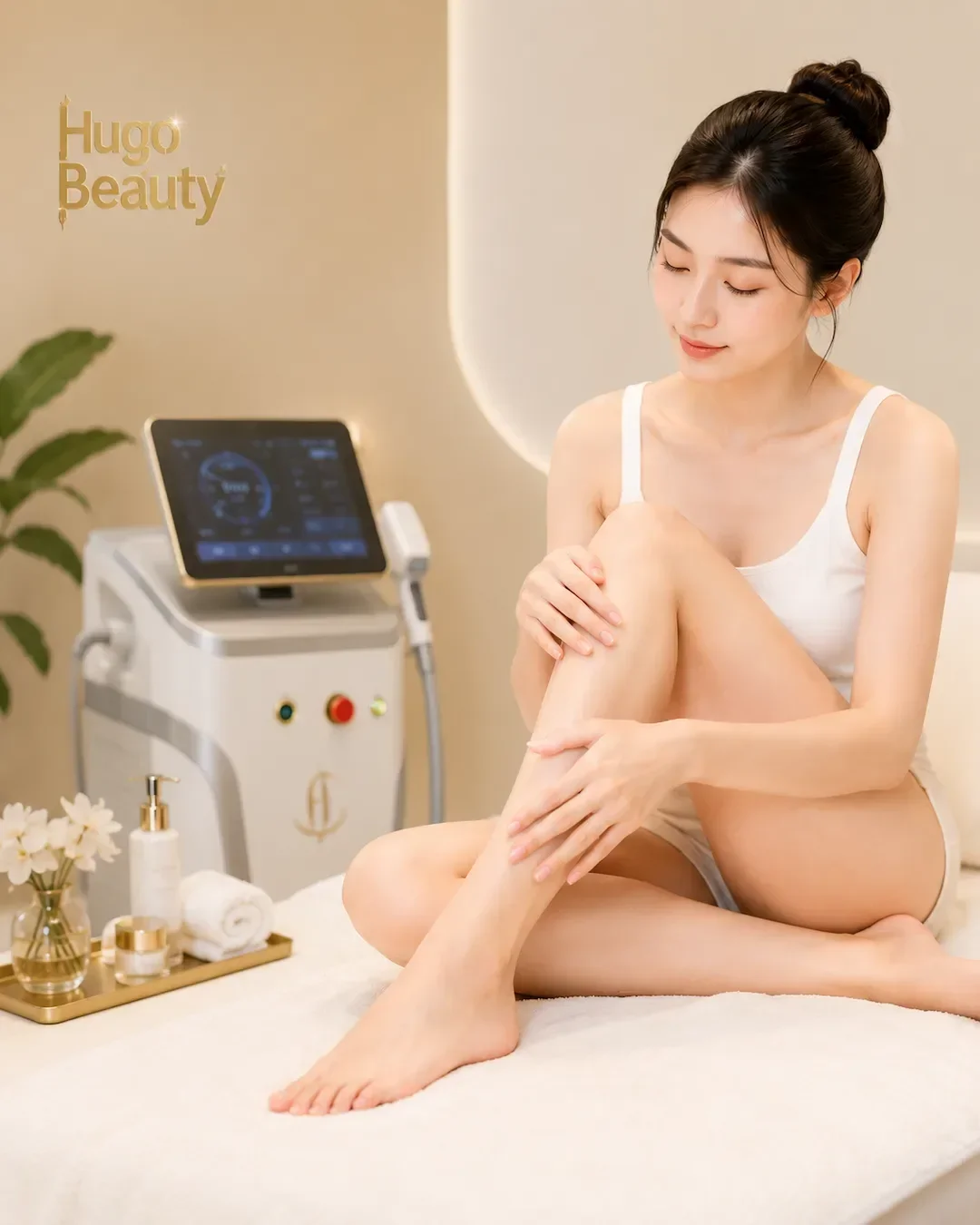
Diode Laser vs IPL Hair Removal: How They Differ and Which One Suits You
Before booking laser hair removal, many people ask the same thing: is the machine IPL or laser, and what is the difference? Every place seems to use a different name (diode, IPL, OPT, SHR, "cold laser"), which makes it harder to compare.
This page compares technologies, not salons. Hugo Beauty uses a diode laser, so we have tried to be clear about where IPL does well too, and let you decide what suits you.
The Quick Answer
Dark, thick hair, light to medium skin, and you want fewer sessions: a diode laser is usually the better fit.
Fair skin, dark hair, a lower price per session, and you do not mind more sessions: IPL at a studio is still a reasonable choice.
A small area you can easily see and reach, and you will use it regularly: an at-home device may be enough.
Fine, blonde, grey or white hair: every method struggles here, so ask carefully before buying a package.
How Diode Laser and IPL Are Different
Both work on the same idea: the pigment in the hair absorbs light, the light turns into heat, and the follicle gets weaker over time. The difference is the kind of light.
Diode laser
A diode laser sends out laser light: one focused beam, at a wavelength chosen so that hair pigment absorbs it well. It targets the pigment in the hair root, which sits only a few millimetres under the skin. Because the energy is focused, most of the heat goes where it is needed, down to the root.
IPL, or "intense pulsed light"
IPL stands for intense pulsed light. The device sends out a broad range of light at many wavelengths, then uses a filter to keep the useful part. The energy is more spread out than a laser's, and part of it is absorbed by the skin, not only the hair. IPL is not a laser. That is a technical difference, not a sign that IPL does not work.
OPT, SHR, DPL and "cold laser": reading machine names
OPT and DPL are versions of pulsed light. They differ in how the light is filtered and how the pulses are delivered.
SHR is the name of a technique: many low-energy pulses fired while the handpiece moves over the skin. The name is used on some laser machines and on many pulsed-light machines, so if you see "SHR", ask whether the machine is actually a laser or pulsed light.
"Cold" hair removal or "cold laser" usually means the handpiece is cooled. It is not a separate technology.
Diode Laser, IPL and At-Home Devices Compared
This table compares the technologies. Exact numbers depend on the machine, the settings and the person doing the session.
| Diode laser | IPL / OPT / SHR (pulsed light) | At-home device | |
|---|---|---|---|
| How it works | A focused laser beam aimed at the pigment in the hair root. | A broad range of light through a filter; energy is more spread out. | Mostly low-power pulsed light; a few are small lasers. |
| Best hair and skin | Dark, thick hair. Light to medium skin; darker skin starts at a lower setting with a test patch. | Works best on fair skin with dark hair. Darker or tanned skin needs more careful settings. | Fair skin, dark hair. Many devices lock if they read the skin as too dark. |
| Number of sessions | 6–10 sessions, 4–6 weeks apart. | Often more sessions, and more regular maintenance. | Regular use on the maker's schedule for the first months, then maintenance. |
| How it feels | Warm, with a light snap like a thin elastic band. The cooled tip stays on the skin the whole time. | A short warm sting with each flash. Some machines have cooling, some do not. | Milder, because the energy is lower. |
| Time per session | 5–45 minutes by area; full body 90–120 minutes. | Similar or longer, depending on the size of the handpiece. | Slow on large areas because you do it yourself. The back is almost impossible to reach. |
| How long results last | After a full course, most follicles stop growing; the rest are thinner and finer. An occasional maintenance session. | Hair becomes thinner and finer. Usually needs more maintenance. | Keeps hair thinner and slower while you keep using it. Hair can slowly come back if you stop. |
| Risks if done wrong | Long-lasting redness or burns from energy too high for the skin, recent sunburn, or skin that is not clean. | Similar; more likely on darker or tanned skin if the setting is wrong. | Using it on tanned skin, moles, tattoos or near the eyes, or on areas you cannot see. |
Waxing and shaving are not in the table because neither works on the follicle: shaving cuts the hair at the surface, and waxing pulls it out, then it grows back.
Which Hair and Skin Types Suit Which Technology
The darker and thicker the hair, the more energy it absorbs and the faster it responds. This is the hair type most clients in Vietnam have, and it is the type a diode laser handles best.
Skin tone matters too, because pigment sits in the skin as well as in the hair. When skin and hair are close in colour, your specialist starts lower and increases step by step over the sessions. Diode lasers handle darker skin better than many older machines, but the first visit always includes a small test patch. IPL works best on fair skin with dark hair. On darker or recently tanned skin, it needs more careful settings.
Fine, blonde, grey or white hair has very little pigment, so both lasers and pulsed light have a hard time with it. If your hair is like this, ask carefully before you buy a package.
If your skin is tanned or you have had sunburn in the last two weeks, wait, whatever the technology.
You can see every area we cover on our diode laser hair removal page.
What "Cold" Laser Hair Removal Really Means
People often search for "what is cold laser hair removal" or "cold vs hot hair removal". The short answer: "cold" describes a cooled handpiece, not a different technology.
At Hugo Beauty, the tip of the handpiece is cooled and stays in contact with the skin for the whole session, taking most of the heat away from the surface. There is still heat at the root, because that heat is how hair removal works. The cooling simply makes the surface more comfortable.
Most clients describe it as a warm snap, like a thin elastic band, repeated quickly. It feels a little stronger in the first sessions, when the hair is still dense, and lighter as the hair thins. The energy level is not fixed. If any spot feels too strong, say so and it will be adjusted.
Sessions, Spacing and How Long Results Last
A laser only works on hairs in their active growing phase. Only part of your hair is in that phase at any time, so sessions need to be spaced out to reach the next group.
For diode laser at Hugo Beauty, most clients need 6 to 10 sessions, spaced 4 to 6 weeks apart. Many notice thinner, slower hair from the third or fourth session. Coming back early does not speed things up; it just uses a session. We send a reminder 5–7 days before your next session, so you do not have to track the dates.
After a full course, most follicles stop growing, and the rest are thinner and much finer. A few hairs can come back years later, often with hormonal changes, and one maintenance session is usually enough.
No method is permanent for everyone. If a place promises "100% hair-free in a few sessions", it is worth asking more questions.
At-Home Devices: Who They Suit and Where They Fall Short
Most at-home hair removal devices use low-power pulsed light; a few are small lasers. The energy is limited so that people without training can use them at home, which also means each use is gentler than a studio session.
An at-home device suits you when:
the area is small and easy to see and reach, such as the lower legs or forearms;
you will use it regularly on the maker's schedule, usually often in the first months and then less for maintenance;
you have fair skin and dark hair, since many devices lock on darker skin.
Where they fall short:
The back is almost impossible to do yourself. You cannot see the area, so you overlap in some places and miss others. It has its own page: back hair removal for men.
The deep bikini area and the area near the eyes are not for home use.
If you stop using the device for a while, hair can slowly come back.
Sharing one device at home: each person has different skin and hair colour, so the right setting is different too.
If you use a home device now and want to switch to diode laser, tell your specialist which device you use and when you last used it before your first session. Shaving is fine. Please shave 12–24 hours before you come.
When IPL Is Still a Good Choice
To be fair, IPL does some things well:
Fair skin with dark or dark brown hair responds well to IPL.
The price per session is often lower, which helps if you want to try it on a small budget.
The wide handpiece makes large areas like the legs fairly quick.
Some newer pulsed-light machines have cooling and better pulse control than older ones.
What to know: IPL often needs more sessions and more regular maintenance to keep results, though the exact numbers depend on the machine and the person doing it. Hugo Beauty does not compare prices or name other places. If your IPL sessions are going well and you are happy, there is no reason to switch.
Does Diode Laser Hair Removal Lighten Skin?
No. Hair removal, by laser or by pulsed light, is not a skin lightening service.
What can change: when you shave, pluck or wax less, the skin is not irritated again and again the way it was. But that is not a promise about skin colour, and it does not change skin that is naturally darker. If a place advertises hair removal with "whitening", ask more questions.
If It Is Done Wrong, and 3 Questions to Ask First
Burns mostly come from three things: energy too high for the skin, recent sunburn, or skin that is not clean (cream, oil or deodorant left on it). This is true for both lasers and pulsed light. Mild redness and warmth for a few hours after a session is normal. If you see blisters or the pain gets worse, message the studio straight away.
Before buying a package anywhere, ask:
Is the machine a laser or pulsed light, and what name is on it?
Will the first session start with a small test patch?
Who does the sessions, and does that person change from visit to visit?
A few more questions about listed prices and single sessions are on our page about choosing a laser hair removal studio near you.
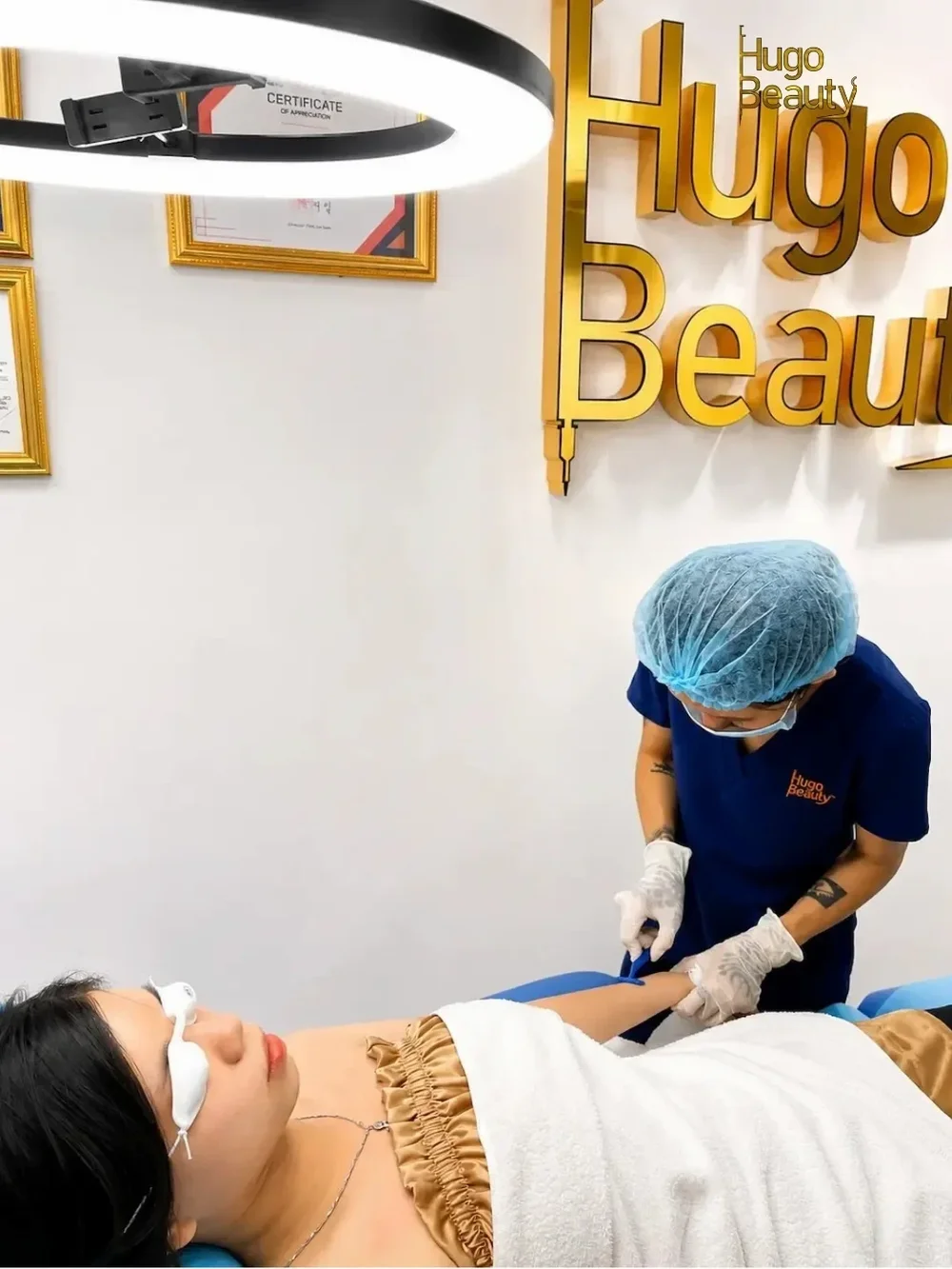
Diode Laser at Hugo Beauty
Hugo Beauty uses a diode laser with a cooled tip that stays in contact with the skin. Sessions are done in person by Kieu Pham, Founder · Aesthetic & Skincare Specialist. Your first session always starts with a small test patch to find the right energy level for your skin. Prices are listed by area, single sessions are available, and you do not have to buy a package on day one.
If you have never had laser before, the underarms are the easiest place to start: a small area, about 10–15 minutes, and the lowest price on our list. See underarm laser hair removal, the easiest place to start. For women, the bikini laser hair removal page explains our one-to-one sessions in a closed room with a female specialist.
If you started a course somewhere else, we can continue from where you are. Just tell us how many sessions you have had and when the last one was.
Hugo Beauty is at 38/14A Nguyen Van Troi, Cau Kieu Ward (formerly Phu Nhuan), Ho Chi Minh City, open 10:00–19:00 every day.
Frequently Asked Questions
Diode laser or IPL: which is better?
There is no single answer for everyone. For dark, thick hair on light to medium skin, which is common in Vietnam, a diode laser usually needs fewer sessions. For fair skin with dark hair and a lower budget per session, IPL is still a reasonable choice.
What is "cold" laser hair removal? Is it a different technology?
No. "Cold" means the handpiece is cooled and touches the skin to take away surface heat. The diode laser at Hugo Beauty has this kind of cooled tip.
Are SHR and OPT lasers?
OPT is a version of pulsed light, not a laser. SHR is the name of a pulsing technique used on both laser and pulsed-light machines, so ask what the machine really is.
Is light-based hair removal harmful?
With the right energy level, on clean skin that is not tanned, the energy only reaches the shallow layer of skin where hair roots sit, not deeper. Risks mostly come from energy that is too high, recent sunburn or skin that is not clean. Wait if you are pregnant, or if the skin in that area is scratched or irritated.
Does diode laser hair removal make skin whiter?
No. Hair removal is not a skin lightening service. Shaving and waxing less only means less repeated irritation; it is not a promise about skin colour.
I use an at-home device. Can I switch to diode laser?
Yes. Before your first session, tell your specialist which device you use and when you last used it. Between sessions, only shave. Do not wax, pluck or thread.
Can diode laser remove fine or light-coloured hair?
A laser needs pigment in the hair, so the finer and lighter the hair, the harder it is for the laser to work on it. Blonde, grey or white hair has almost no pigment, so please ask your specialist before buying a package.
I had a few IPL sessions somewhere else. Do I have to start again?
Send us how many sessions you have had, which machine was used, and when your last session was. Your specialist will explain how it works before you start, so you know the expected number of sessions in advance.
Underarms
200,000 VND
per session · the easiest place to start
Full Bikini
600,000 VND
per session · female clients only
Full Body
2,500,000 VND
per session · about 90–120 minutes
Single-session prices from our listed price list. Payment: cash, card, bank transfer.