
Small red bumps a day after shaving, a hair that curls back under the skin, a dark spot that stays for weeks. For many people in Ho Chi Minh City, this is the real reason they start laser hair removal, more than the hair itself.
Laser usually reduces ingrown hairs over a course, but it does not happen in the first session. And during the course you still need to shave. This guide explains why the bumps happen, how to shave so you do not make them worse, and what you can expect to change from one session to the next.

Why shaving leaves bumps and ingrown hairs
A razor cuts the hair at the surface of the skin and leaves a sharp tip. When the hair grows back, that tip can curve and push into the skin next to the follicle instead of growing out. The skin treats it like a splinter, and you get a small, red, sometimes itchy bump.
Hot, humid weather makes it more likely. Sweat and friction from clothing keep the skin around the follicle soft and irritated. Thick, curly or coarse hair also curls back more easily than fine hair. That is why the same areas cause trouble again and again.
Razor bumps, ingrown hairs, or something else? A quick self-check
Razor bumps: many small red dots along the shaved area, showing up a day or two after shaving. They usually calm down on their own within a few days.
Ingrown hair: one bump, sometimes with a hair you can see curled under the skin. It can leave a dark mark after it heals.
Something else: a bump that is getting bigger, painful, hot, filled with pus, or spreading after several days is not a normal shaving bump. Do not try to open it. Show it to a doctor.
If you are not sure, send Kieu a photo on WhatsApp before your session. Skin that is inflamed is not worked on that day.
The areas that get it most
Underarms: thick hair, sweat and deodorant, and the skin folds every time you move your arm.
Bikini line: curly hair, tight underwear and moisture. This is the most common place for ingrown hairs. See bikini laser hair removal in Ho Chi Minh City.
Legs: especially the shins and the back of the knees, where people shave fast and against the grain.
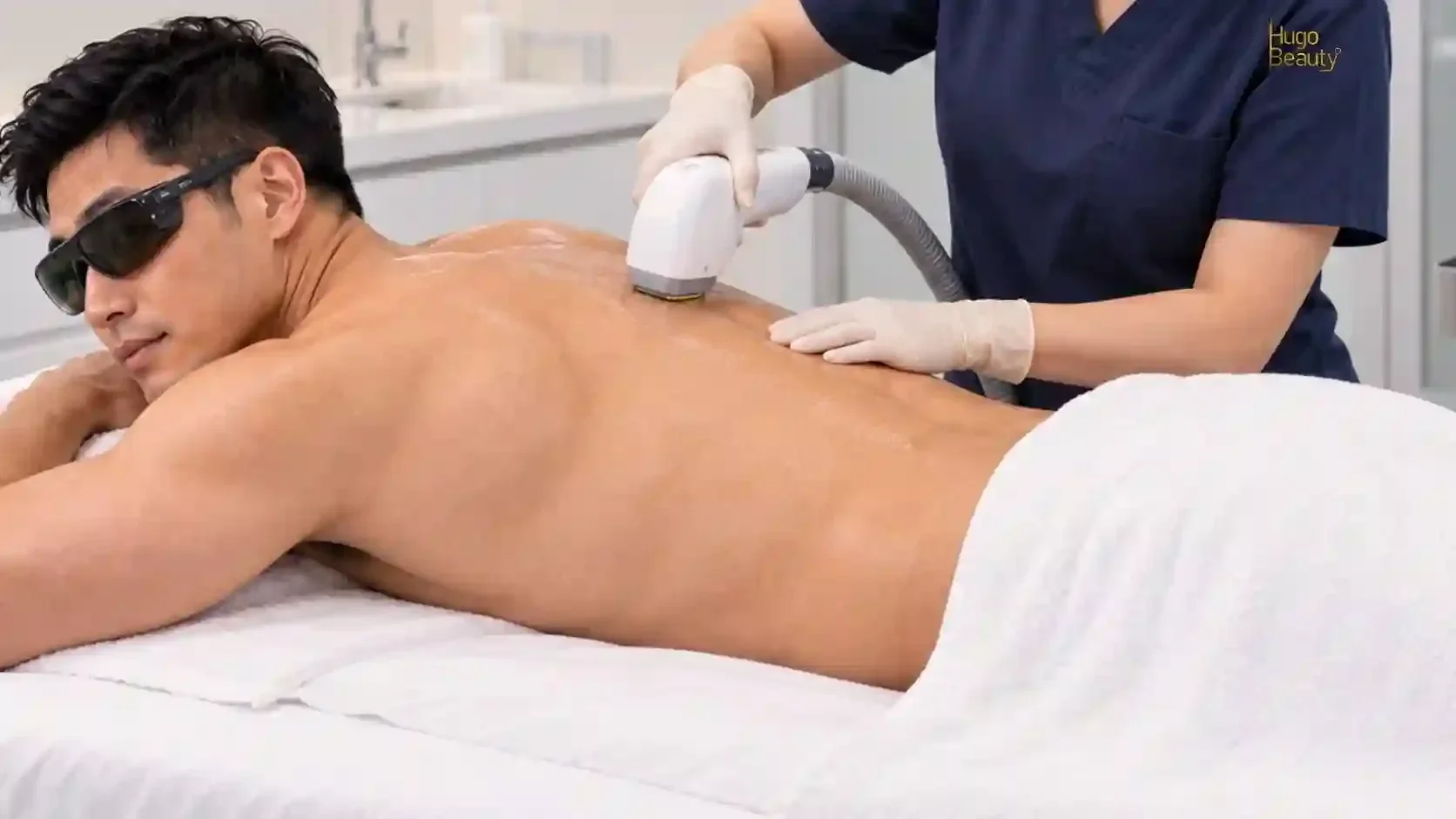
Men's back and chest: large areas with thick hair, hard to shave evenly, and covered by a sweaty shirt all day. The back is also the one area you cannot reach well yourself. See back hair removal for men and chest hair removal for men.
How to shave between laser sessions without making it worse
Shaving is the only hair removal method you use during a laser course, so it is worth doing well.
Wait until the skin is calm. After a session, wait about three days before you shave the area again.
Shave after a shower, not before. Warm water softens the hair, so the razor cuts cleanly instead of pulling.
Use a clean, sharp razor. A dull blade drags across the skin and leaves more jagged tips. Change it often, and do not share it.
Use a gel or foam, not dry skin or bar soap.
Shave with the direction of growth, in short strokes, without pressing hard. Going against the grain gives a closer shave, but it is also the main cause of ingrown hairs.
Do not go over the same spot many times.
Rinse with cool water and pat dry. Then use a simple, fragrance-free moisturiser.
Wear loose clothing for the rest of the day if you can, especially after shaving the bikini line or underarms.
Before a session, shave the area the day before, following the same steps. A fresh, clean shave means the laser energy goes into the root instead of hair sitting on the skin surface.
Why waxing, plucking and epilators are off the list during a course
Laser works through the root of the hair. Waxing, plucking, threading and epilators all pull the root out, so at your next session there is nothing left for the laser to reach. They can also cause ingrown hairs of their own. If you are weighing the two for the bikini area, see bikini waxing vs laser hair removal.
During your course, shave only. If a single ingrown hair bothers you, leave it alone and show it to Kieu at your next visit instead of digging it out with tweezers.
What changes after the first few laser sessions
Sessions 1–2: the hair starts to shed one to two weeks after each session. You still shave, and you may still get some bumps.
The middle of the course: most people notice the hair is thinner and grows back more slowly. You shave less often, so the skin gets fewer chances to become irritated.
Towards the end of the course: the remaining hair is finer and sparser. Fine hair curls back into the skin much less than coarse hair.
Most clients need 6 to 10 sessions, 4 to 6 weeks apart, for every area. The full picture of how a course works is on our laser hair removal in Ho Chi Minh City page.
A dark mark left by an old ingrown hair is a mark on the skin, not a hair. Laser hair removal does not promise to fade it. What it can do is stop new ingrown hairs from leaving new marks.
When to wait before a session
Message Kieu to move your appointment if the area has:
bumps that are still red, sore or inflamed
cuts or scratches from shaving
an open spot where you tried to remove an ingrown hair
A few calm, flat marks are not a reason to wait. Kieu checks the skin before every session, and works around a spot that is not ready rather than over it.
Frequently Asked Questions
Will laser hair removal stop ingrown hairs?
For most people, ingrown hairs become much less frequent over a course, because the hair becomes thinner and you shave less often. It is gradual, not something you see after one session.
Can I shave if I have razor bumps before my session?
Shave gently around them, and do not shave over bumps that are still inflamed. If the area is still red or sore close to your appointment, send a photo first, and the session can be moved.
I get ingrown hairs on my bikini line every time I shave. Should I wax instead?
Not during a laser course. Waxing removes the root the laser needs, and it can cause ingrown hairs too. Shave with the direction of growth, and wear loose cotton underwear on the day you shave. More in bikini waxing vs laser hair removal.
