
Is Laser Hair Removal Harmful? 6 Common Myths, and What Actually Happens
Before their first session, many clients arrive with a list of worries picked up from friends, family or social media. Some of them are fair questions. Others come from mixing up laser light with X-rays, or hair removal with skin whitening.
This guide goes through the six we hear most often in our Phu Nhuan studio. Each one has a short answer, the reason behind it, and the cases where real caution makes sense.
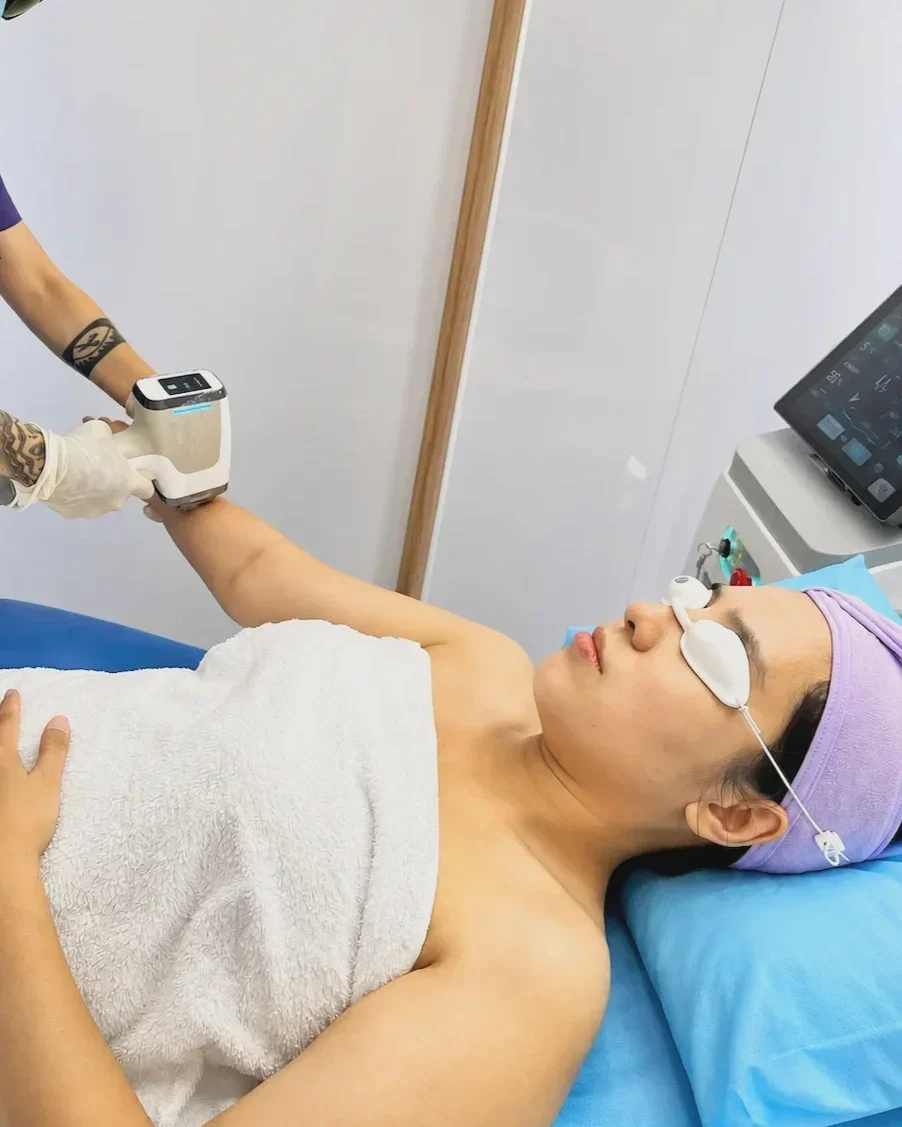
First: how far does the laser actually go
A diode laser sends light at a wavelength chosen so the pigment in the hair absorbs it. The pigment turns that light into heat, and the heat travels down to the root. Hair roots sit in the upper layer of skin, only a few millimetres deep. That is where the energy is absorbed and fades out. It does not travel deeper into the body.
Once this is clear, most of the myths below answer themselves. A full comparison of diode laser, IPL and at-home devices is on our diode laser vs IPL page.
Myth 1: "Laser hair removal can cause cancer"
Short answer: there is no evidence that laser hair removal causes cancer.
The worry usually comes from the word "radiation". But the light used for hair removal is not ionising radiation like X-rays, which carries enough energy to damage cell structures. Hair removal light only creates heat at the hair root, in the upper layer of skin.
What deserves attention is something else: moles. Moles should be covered or worked around, never treated directly. If you have a new mole, or one that is changing in size, colour or shape, see a dermatologist first, not a hair removal studio.
Myth 2: "Laser near the bikini area or stomach affects fertility"
Short answer: no. The energy stops at the hair follicle, a few millimetres under the skin. It does not reach the ovaries or testes.
We explain the bikini area in more detail in is bikini laser hair removal safe. The same applies to any area near the lower stomach.
When it comes to fertility, the case where you should wait is pregnancy. Not because harm has been shown, but because there is not enough research on pregnant women. Waiting until after the baby is born is the calmer choice.
Myth 3: "Hair grows back thicker and darker"
Short answer: for most people, the opposite happens. Hair comes back much sparser and finer.
This myth often comes from shaving. A razor cuts the hair straight across, so the regrowing tip feels blunt and coarse. But the number of follicles and the real thickness of each hair do not change. Laser works differently: it weakens the follicle over the sessions.
There is one rare effect worth knowing. In a small number of cases, fine vellus hair in or near the treated area becomes darker after laser. It has mostly been reported on fine hair on the face and neck. If the area you want treated is mainly fine, light hair, ask your specialist carefully before buying a package.
Myth 4: "Underarm laser makes you sweat more, or sweat somewhere else"
Short answer: laser does not touch the sweat glands, so it neither increases nor reduces sweating.
What many people notice is that the underarms feel drier, simply because less hair holds moisture. The idea of sweat "moving" elsewhere comes from certain treatments for excessive sweating, not from hair removal. Odour and deodorant are covered on our underarm laser hair removal page.
Myth 5: "Laser leaves dark marks"
Short answer: with the right energy level, on skin that is not tanned, dark marks are not a usual result. Old marks from years of shaving or waxing will not disappear because of laser either.
Two situations make temporary dark patches more likely: energy that is too high for your skin, and treating skin that is currently tanned. Both are prevented by a test patch at the first visit and by rescheduling after a beach trip. We go into this in laser hair removal on darker or tanned skin.
Myth 6: "Laser hair removal lightens your skin"
Short answer: no. Hair removal is not a skin lightening service.
When you stop shaving, plucking or waxing all the time, the skin is irritated less often and may look calmer. That is not a promise about skin colour. If a studio sells hair removal with "whitening", it is worth asking what they mean.
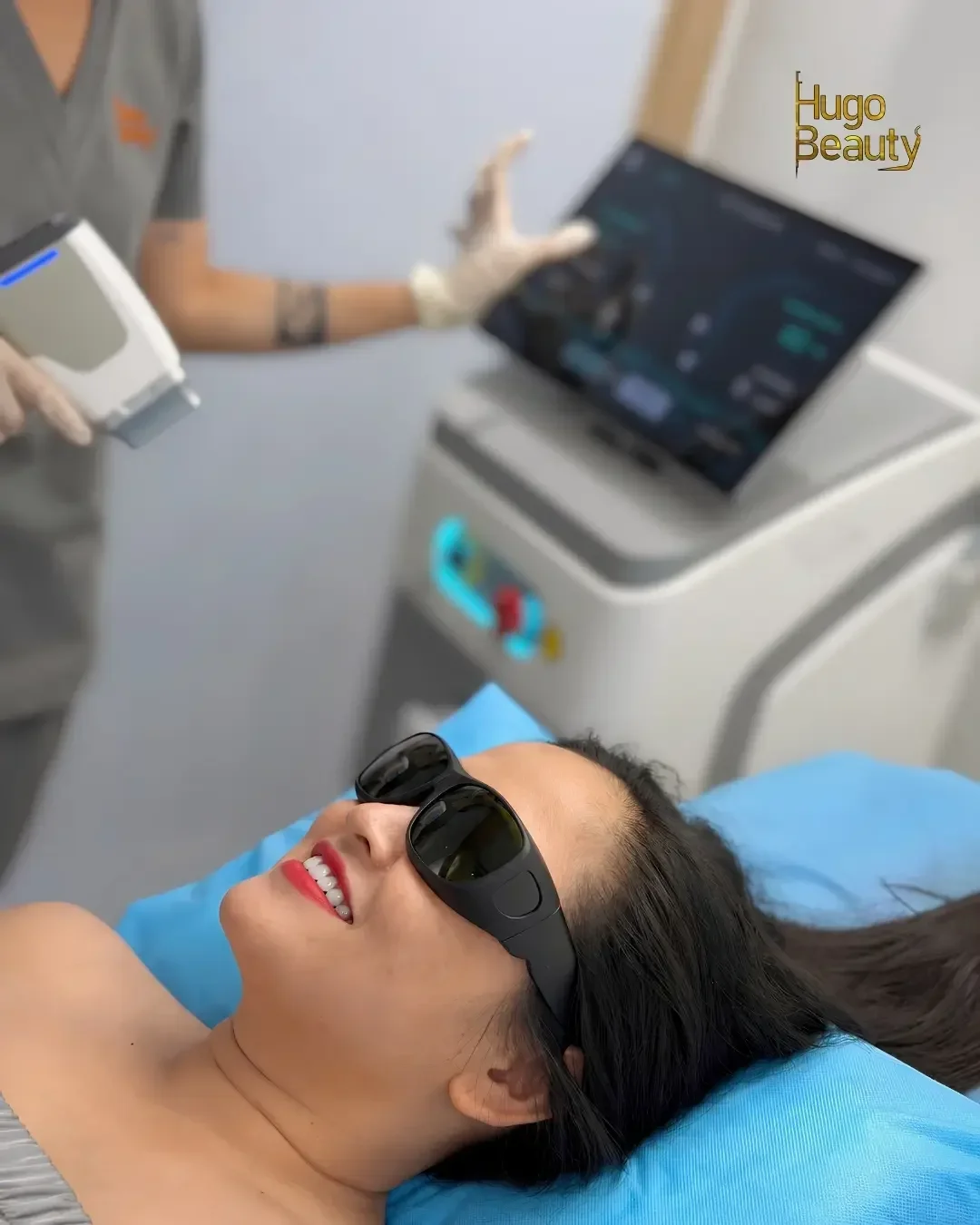
When caution really makes sense
Instead of the myths above, these are the situations where you should wait or ask first:
You are pregnant.
The skin in the area is broken, inflamed, has pustules or is irritated.
You had a sunburn or strong sun exposure in the last 2 weeks.
You recently plucked or waxed, so the roots have not grown back yet.
A mole in the area is changing: see a dermatologist first.
You take medication or use products that make skin sun-sensitive: tell your specialist before the first session.
Three questions to ask at your consultation
Does the first visit include a small test patch?
Who carries out the sessions, and will it be the same person each time?
If my skin is red or stinging afterwards, who do I message, and how quickly will they reply?
A small test patch at the first visit is a good idea, so the energy level can be matched to your skin. Hugo Beauty is in Phu Nhuan, between Tan Son Nhat Airport and District 1, open 10:00–19:00 every day. Listed prices by area are on our price list.
Frequently Asked Questions
Is laser hair removal the same as an X-ray?
No. It uses light at a wavelength chosen to be absorbed by hair pigment, not ionising radiation like X-rays. The energy turns into heat at the hair root, in the upper layer of skin.
Can I have laser on an area with moles?
Yes, but moles should be covered or worked around, never treated directly. If a mole is new or changing in colour or size, see a dermatologist first.
Will I sweat more after laser hair removal?
No. Laser does not affect sweat glands. Many people find their underarms feel drier because less hair holds moisture.
