
HIFU Aftercare: Do’s and Don’ts for the First 2 Weeks
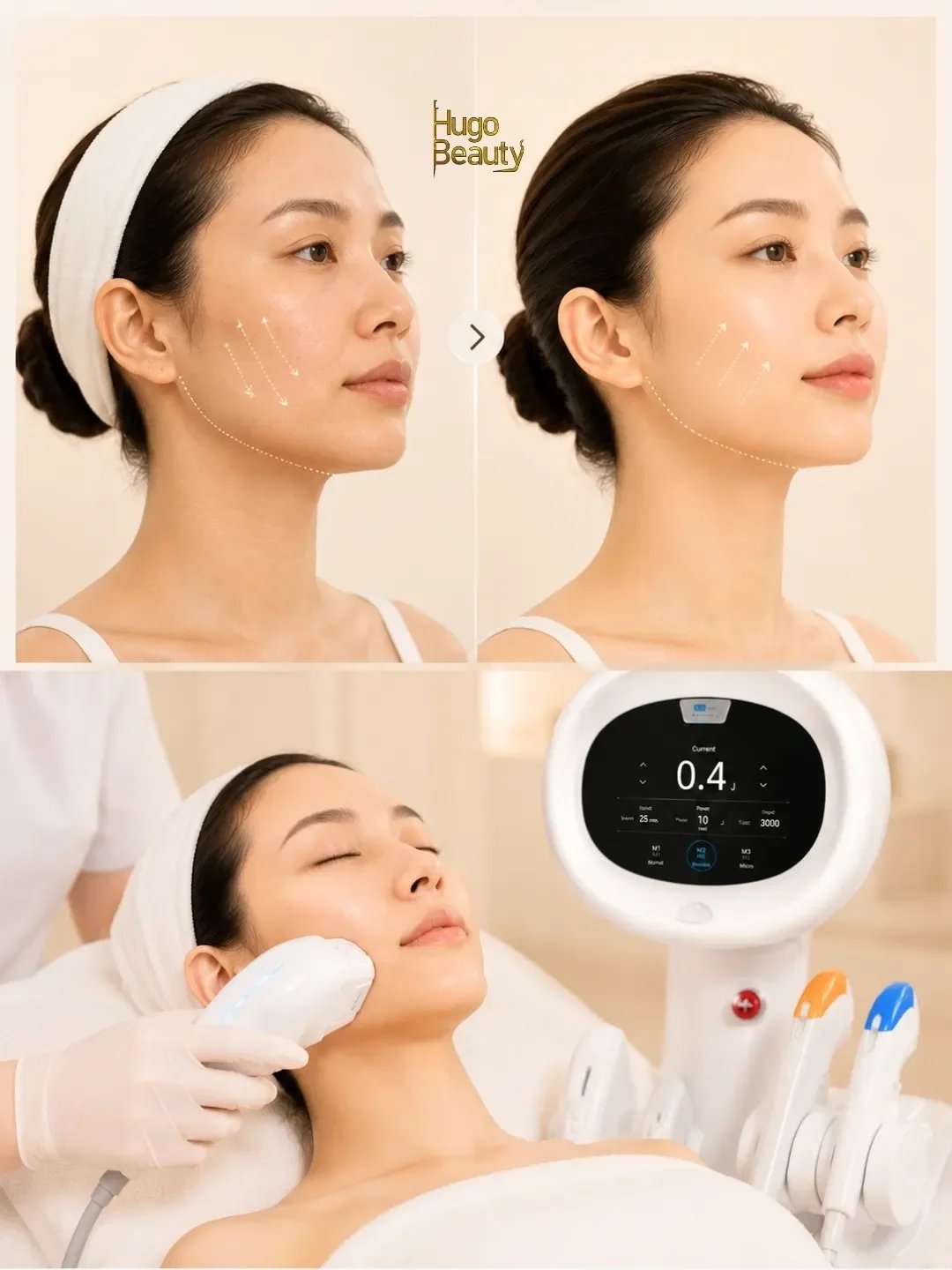
The treatment takes under an hour, but what you do in the fortnight after HIFU shapes how well the collagen you have just stimulated rebuilds. If you are still deciding whether the treatment suits you, start with our complete guide to deciding on a HIFU facelift. This post is for those who have booked, or just walked out of the treatment room, and want a clear day-by-day plan for HIFU aftercare.
Why aftercare matters for collagen
HIFU creates tiny, controlled thermal points in the deeper layers of the skin and the SMAS, and your body responds by laying down fresh collagen and elastin over the following weeks. That healing response is delicate, particularly in the first few days.
Anything that adds inflammation, heat or mechanical stress during that window competes with the repair. Good aftercare does not make HIFU work harder; it simply removes the obstacles. How results then build over the following months is covered in our post on the HIFU results timeline.
Day 0: the first evening
When you leave Hugo Beauty, your skin will typically look slightly pink and feel warm, a little like mild sunburn. Some clients notice faint tenderness along the jawline or a puffy feeling in the cheeks. This usually settles within a few hours.
For the rest of the day keep it simple: lukewarm water and a mild, fragrance-free cleanser, then a plain moisturiser with hyaluronic acid, panthenol or ceramides — nothing with fragrance, alcohol or exfoliating acids. Skip makeup for the first evening if you can, go easy on salt, and sleep on your back with your head slightly elevated so mild swelling drains overnight.
If you want the first three days broken down hour by hour — washing, cleanser, makeup, hair washing and the gym — see our guide Can I wash my face after HIFU?.
Days 1 to 3: protect and calm
By the next morning most of the pinkness has faded, although you may still feel mild tenderness when you press the treated areas or chew something firm. A few clients notice small patches of numbness or tingling; in our experience this fades within days. What the treatment itself feels like is covered in does HIFU hurt.
Not sure whether what you are seeing is normal — lingering swelling, a numb patch, a tender spot along the jaw? Our guide to HIFU and Ultherapy side effects sorts every reaction into normal, uncommon and call-the-clinic.
Sun protection is now your priority. Use broad-spectrum SPF 30 or higher every morning, reapply outdoors, and wear a hat in the Ho Chi Minh City midday sun. Freshly treated skin is more reactive, and UV exposure can trigger pigmentation.
Avoid heat in every form for these three days: no sauna, steam room, hot yoga, hot springs or very hot showers on the face. External heat adds to the thermal load the tissue is already processing and can prolong swelling.
Keep exercise light. A walk is fine; a spin class that leaves you flushed and sweating is not, because the rise in blood flow and skin temperature works against calming. Alcohol dilates blood vessels and dehydrates you, so we ask clients to skip it for at least 48 to 72 hours.
Your skincare stays minimal: gentle cleanser, hydrating moisturiser, SPF. No retinol, no glycolic or salicylic acids, no high-strength vitamin C, no scrubs, no cleansing brushes. Makeup can go back on from day 1 if the skin feels comfortable, but use clean brushes and remove it thoroughly.
Week 1: ease back into normal life
From around day 4 the skin has usually calmed completely, and most clients say they have forgotten they had anything done. Tenderness along the jaw or in front of the ear may linger, especially where the 4.5 mm cartridge was used near bone, but it should be improving every day rather than getting worse.
You can return to normal exercise in the second half of the week, building intensity gradually. Moderate alcohol is fine again. Stay strict with sun protection; that rule never really goes away for anyone investing in their skin.
Hold off on facial massage, gua sha, jade rollers and any device that presses or vibrates against the face until the end of week 1. The SMAS layer is still remodelling and does not benefit from being pushed around.
Keep actives on the shelf for the full week. Applying retinol, tretinoin, AHAs, BHAs or strong vitamin C to skin that is still slightly sensitised often causes stinging, peeling or unexpected redness.
If you are travelling soon, timing matters more than most people expect; our post on HIFU before or after a flight explains why.
Week 2: reintroduce actives and plan other treatments
By the start of week 2, the skin is typically ready for your usual routine. Reintroduce actives one at a time at a lower frequency than before, for example retinol two nights a week, then build up. If you notice unusual sensitivity, pause and give the skin a few more days. And if the skin still feels tight and looks dull once your routine is back to normal, that is usually dehydration rather than anything to do with the session — deep hydration is the route to look at.
Heat-based activities are fine again for most clients. If you are a regular at hot yoga or sauna, return at a shorter duration first and see how the skin responds.
Other aesthetic treatments need more planning. We generally advise waiting at least two weeks before superficial treatments such as facials, light peels or LED, and at least four weeks before anything that works in the deeper layers, including microneedling, radiofrequency, laser resurfacing, fillers or threads. Stacking energy-based treatments too close together does not double the result; it overloads tissue that is already busy repairing.
At your two-week check with Kieu we look at how the skin has settled. Questions about maintenance intervals belong in our guide on how many HIFU sessions you need.
Normal symptoms versus reasons to call us
Most of what you feel after HIFU resolves on its own. In our experience the following are expected:
Mild redness or warmth on the day of treatment
Tenderness or a bruised feeling when pressing the jawline, cheeks or temples for up to two weeks
Slight puffiness in the mornings during the first few days
Small patches of tingling or reduced sensation that fade gradually
Occasional faint welts or lines along the treatment paths that disappear within a day or two
A small number of symptoms deserve a message to us. Please contact us if swelling increases after day 3 rather than decreasing, numbness has not begun to improve after two weeks, you see blistering or broken skin, or you notice any change in the movement of your mouth or eyebrow. These are uncommon with a properly operated Ultraformer MPT and careful line planning, but we would always rather see a photo on WhatsApp or Zalo and reassure you than have you worry at home.
FAQ
Cleansing in the first week after HIFU
Cleanse gently with lukewarm water and a mild, non-foaming cleanser from the first evening, and avoid hot water, scrubs, cleansing brushes and exfoliating acids for the first week. Pat dry, then apply a simple hydrating moisturiser and sunscreen in the morning.
When can I wear makeup after HIFU?
Most clients can wear makeup from the day after treatment, provided the skin feels comfortable and there is no broken skin. We suggest skipping it on the evening of treatment itself, using mineral or lightweight products for the first few days, and removing everything thoroughly at night with a gentle cleanser so the pores are not clogged while the skin recovers.
How long should I avoid alcohol and sauna after HIFU?
We ask clients in Ho Chi Minh City to avoid alcohol for at least 48 to 72 hours and to skip saunas, steam rooms, hot yoga and very hot showers for the first three days. Both raise skin temperature and blood flow, which can prolong swelling. A more cautious client might extend the heat ban to a full week without any downside.
Can I use retinol after HIFU?
Not straight away. Retinol, tretinoin and exfoliating acids should be paused for the first week, when the skin is still sensitised. From the start of week 2, reintroduce one product at a time at a reduced frequency and build back up over a fortnight. If you notice stinging, peeling or unexpected redness, pause again and give the skin more time.
Conclusion
HIFU aftercare is not complicated, but it rewards a little discipline: keep the skin cool, protected and calm for three days, hold off on actives and massage for a week, and space out other treatments sensibly. If you are still weighing up the treatment, our guide on HIFU facelift pros and cons will help. And if you would like a personalised plan for HIFU face lifting in Ho Chi Minh City, including aftercare tailored to your skin and routine, message us on WhatsApp or Zalo at +84 904 324 532 to book a consultation at Hugo Beauty.
Not sure HIFU is right for you?
Message us on WhatsApp and Kieu will look at your skin and suggest which area to start with, or see the full price list.
